I Replaced Hydraulic Lifters on My 1993 Opel Vectra and Dropped a Shim Into the Engine
hydraulic lifter noise diagnosis. My Vectra had been ticking for months. On a cold start, I could hear a loud tick-tick-tick. After about five minutes, it became quieter, but the noise never disappeared completely.
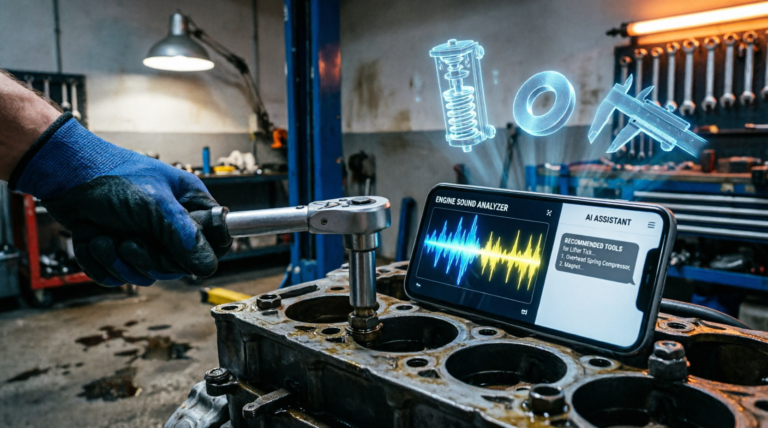
Before opening the engine, I wanted to check what was causing the noise. I tried a free car sound diagnosis app — our own AI engine sound diagnosis tool.
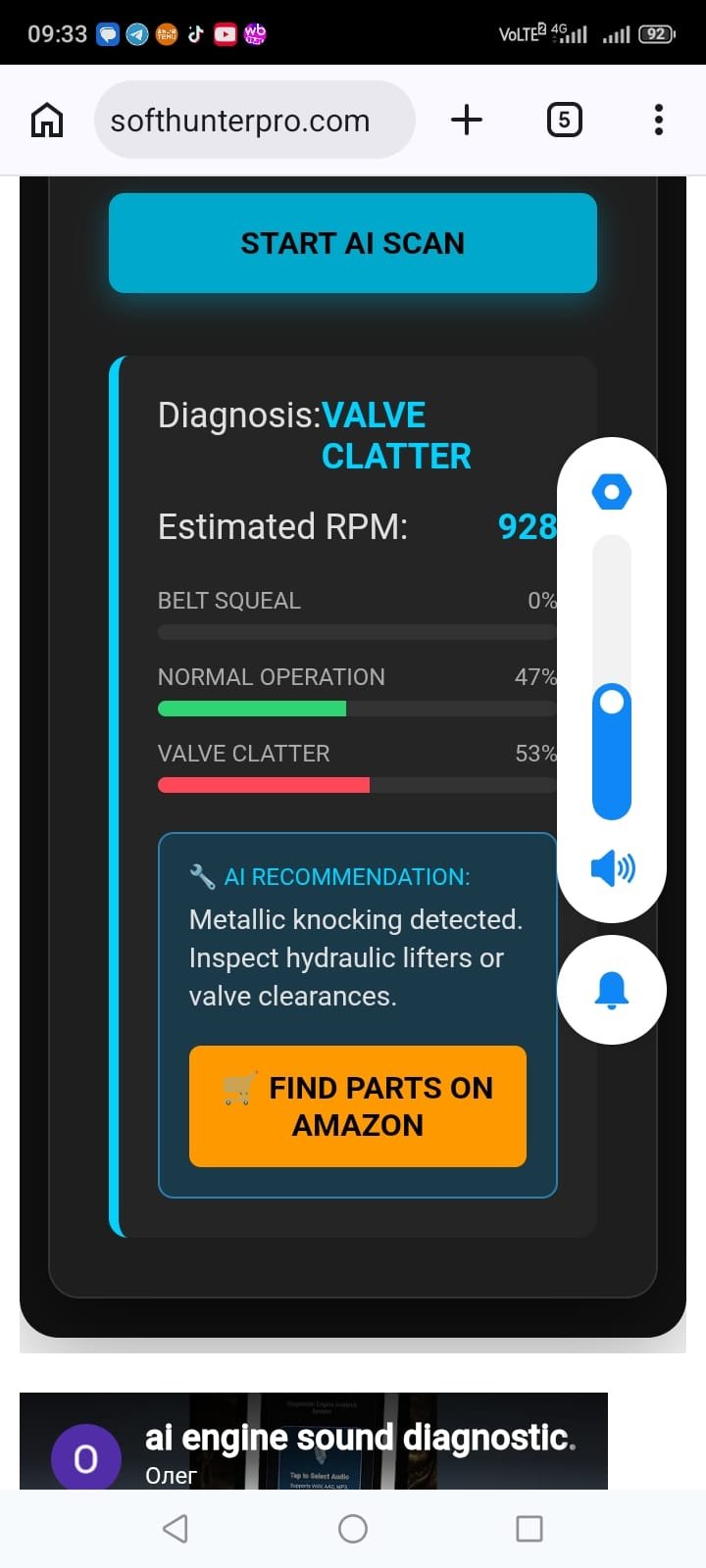
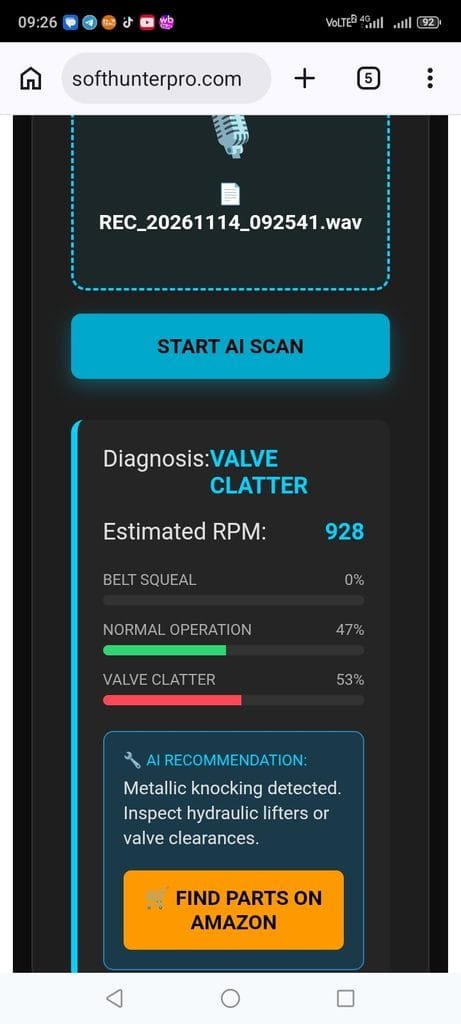
I recorded five seconds of engine noise during a cold start, uploaded the recording, and waited. In about 15 seconds, the tool identified a possible hydraulic lifter tick in the 2000–5000 Hz frequency range.
I already suspected the lifters, but I wanted confirmation. The diagnosis turned out to be correct.
A lot of people ask me about EngineEar AI. I tried it too. EngineEar AI is a popular tool for engine sound analysis, but I wanted to test our own system on a real car in a real garage, not in a laboratory.
So I used our tool on my Vectra, then opened the engine myself to check whether the diagnosis was correct.
It was.
How It Sounded Before
On a cold start, the ticking was loud enough to hear from about five meters away. After the engine warmed up, it faded to a lighter ticking noise at idle.
If your engine sounds similar, you can record five seconds of audio and upload it to our AI engine sound diagnosis tool.
It can help identify possible hydraulic lifter noise and distinguish it from other sounds, such as rod knock or valve noise.
The tool is free to try and does not require registration.
What I Bought
Here is what I needed for the repair:
- 8 hydraulic lifters — approximately $25
- Cylinder head gasket set — approximately $18
- Engine oil 10W-40 and oil filter — approximately $23
Total: approximately $66.
I did not originally plan to buy a cylinder head gasket set. Unfortunately, my own mistake made it necessary. Here is what happened.
The Mistake: I Dropped a Shim Into the Oil Channel
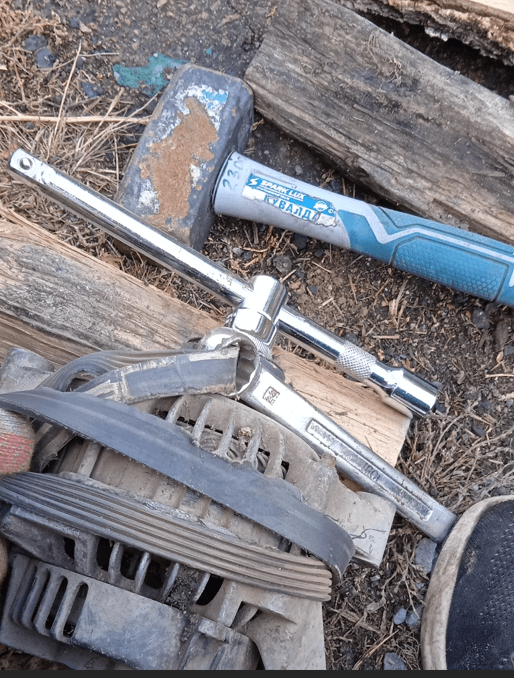
I was removing the old hydraulic lifters. I had not plugged the oil channels with a rag. I thought everything would be fine because I was working carefully.
It wasn’t.
One valve shim slipped out of my hand and fell straight into the oil channel. I watched it disappear.
Lesson number one: Always cover the oil channels with clean rags before working on hydraulic lifters.
Ten seconds of preparation can save hours of unnecessary work. I learned that the hard way.
For general guidance on Opel Vectra repairs, I also checked the Haynes repair manual:
https://haynes.com/en-gb/opel/vectra
You can also find manufacturer information on the official Opel website:
I Removed the Oil Pan for Nothing
My first thought was simple: the shim had probably fallen all the way into the oil pan.
I decided to remove the pan and retrieve it.
I drained the oil, got underneath the car, removed the oil pan, and started looking.
Nothing.
The oil pan was empty. There was no shim.
I had wasted about an hour.
What I didn’t realize was that the oil passage had a bend. The shim had not fallen all the way down. It had become stuck somewhere inside the cylinder head.
Then I Had to Remove the Cylinder Head
There was no easy way to retrieve the shim.
To get it out, I had to remove the cylinder head.
That meant:
- Draining the coolant.
- Removing the intake manifold.
- Removing the timing belt cover.
- Disconnecting the necessary components.
- Unbolting and removing the cylinder head.
What should have been a relatively simple two-hour hydraulic lifter replacement turned into a full-day repair.
I also needed a new cylinder head gasket set. The old head gasket could not simply be reused.
If you are doing this repair yourself, make sure you have the correct tightening sequence and torque specifications for your particular engine.
I also checked repair information and Opel Vectra owner discussions before reassembly.
One important point: check the exact head bolt requirements for your engine. If the manufacturer specifies torque-to-yield bolts, they must be replaced rather than reused.
Sound After Hydraulic Lifter Replacement
After retrieving the shim, I could finally put everything back together.
I installed the new hydraulic lifters, fitted the new head gasket, replaced the oil, and reassembled the engine.
The next morning, I started the engine cold.
Silence.
The ticking noise was gone.
I recorded another engine sound sample and uploaded it to our AI diagnosis tool.
This time, the result showed no hydraulic lifter tick detected — only normal engine noise.
Before and After
Before replacement:
- Cold start: Loud ticking.
- Warm idle: Light ticking remained.
- AI diagnosis: Possible hydraulic lifter noise.
After replacement:
- Cold start: Quiet operation.
- Warm idle: No noticeable ticking.
- AI diagnosis: No lifter tick detected.
Total repair time: One full day, mostly because of my mistake with the dropped shim.
Was It Worth Doing It Myself?
Yes, even with the extra work.
A local repair shop had quoted approximately $95–$125 for hydraulic lifter replacement alone, without including the cylinder head gasket.
I spent approximately $66 on parts, including the additional gasket set that I had to buy because of my mistake.
The difference could have been even greater if I had prepared properly.
If I had simply plugged the oil channel with a rag, I could probably have completed the original lifter replacement in about two hours and avoided the additional expense.
What I Learned
Here are the three things I would tell anyone attempting this repair:
- Plug every oil channel before starting work. Use clean rags and make sure nothing can fall inside.
- If you drop something, don’t assume it has fallen into the oil pan. Check the oil passage and understand where it leads before removing unnecessary components.
- Prepare everything before starting. Don’t begin a major repair late in the evening or when spare parts stores are closed.
A little preparation can save a lot of frustration.
Conclusion
If your Opel Vectra or another older engine makes a ticking noise on cold starts, don’t ignore it.
It could be hydraulic lifters, valve noise, or something more serious, such as rod bearing knock.
Before taking the engine apart, you can record five seconds of sound and try a free car sound diagnosis app.
Our AI engine sound diagnosis tool can help identify possible engine noises and give you an initial idea of what might be wrong before you start spending money on repairs.
And if you decide to replace the hydraulic lifters yourself, remember one thing:
Plug the oil channels with clean rags. Trust me.
Disclaimer: I am not a professional mechanic. This article describes my personal experience repairing my own 1993 Opel Vectra. Every engine is different, and repair procedures may vary depending on the engine model. Always follow the manufacturer’s specifications, torque settings, and safety procedures. If you are unsure about any part of the repair, consult a qualified mechanic. The author is not responsible for damage resulting from the use of this information.
I previously documented how I used our AI engine sound diagnosis tool to identify the ticking noise on my Opel Vectra. If you want to see how the diagnosis performed in practice and what happened when I decided to replace the hydraulic lifters myself, you can read my original engine sound diagnosis test here. original engine sound diagnosis test