Testing “AI-Garage”: The Ultimate Engine Sound Diagnostic AI App in Action
Engine Sound Diagnostic AI App. Artificial intelligence is rapidly moving out of the browser and into the real world. Today, we are putting acoustic AI diagnostics to the test. If you’ve ever searched for a reliable car noise identifier online free, you know how hard it is to find a tool that actually works in a real garage. Can a web-based engine sound diagnostic AI accurately identify mechanical issues just by “listening” to a cold engine start?
To find out, I ran a field test using an advanced car noise diagnostic tool designed to act as a digital “engine ear AI”, detecting anomalies like belt squeal, bearing wear, and valve clatter.
Disclaimer: The information and AI diagnostic results provided in this article are for educational and informational purposes only. While AI tools offer excellent preliminary guidance, they do not replace the physical inspection of a certified mechanic. Always consult a professional before performing complex engine teardowns or ordering expensive parts.
The Experiment Setup
- Vehicle: Classic 1.6L Engine (1993 model)
- Conditions: Cold start, ambient temperature 25°C (77°F).
- Methodology: Recording the engine’s acoustic signature from four different distances to test the AI’s spatial sensitivity (Inside the cabin, at the front grille, near the radiator, and directly above the engine block).
Diagnostic Results Summary
To see how environmental noise and distance affect the neural network’s accuracy, I logged the data from each recording location. Here is the comparative breakdown of the AI’s performance:
| Recording Location | Audio File | Estimated RPM | Primary AI Diagnosis | Confidence Score |
| Inside Cabin (Closed Doors) | 18.34.wav | 0 | LOW SIGNAL | N/A |
| Front Grille | 18.35.wav | 1050 | VALVE CLATTER | 64% |
| Near Radiator | 18.37.wav | 1058 | VALVE CLATTER | 58% |
| Direct Engine Block | 18.38.wav | 1151 | VALVE CLATTER | 70% |
Deep Dive: Analyzing the AI Audio Scans
1. The Cabin Test: Filtering Out the Noise
Audio File: 18.34.wav

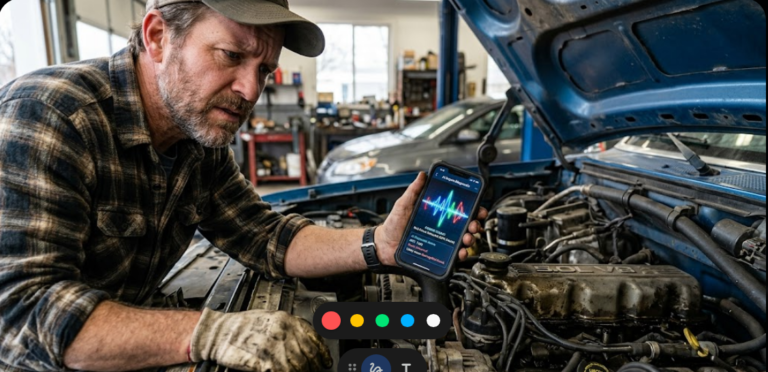
Recording from inside the cabin resulted in an immediate LOW SIGNAL error. The engine was running, but the standard sound deadening filtered out the specific high-frequency mechanical noises the AI needed to make an accurate assessment.
AI Verdict: The algorithm correctly refused to guess and prompted: “Audio signal too low. Please hold your device closer to the engine block.” This is an excellent sign of a well-trained model designed to avoid false positives.
2. The Front Grille & Radiator: Catching the Frequencies
Audio Files: 18.35.wav & 18.37.wav

As I moved closer to the front of the vehicle, the engine sound diagnostic AI app started processing the acoustic data successfully. The AI calculated the engine speed based purely on the audio frequency, showing 1050 to 1058 RPM, which perfectly matches a typical warm-up idle. The network flagged VALVE CLATTER with a confidence rating hovering around 60%.
3. Direct Engine Block Scan: Pinpoint Accuracy
Audio File: 18.38.wav

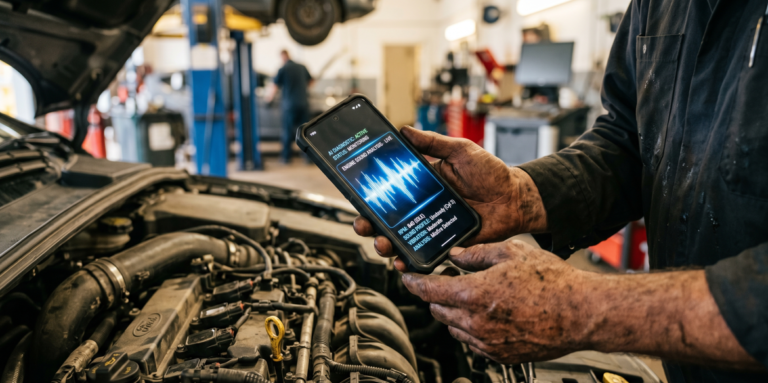
Placing the smartphone directly over the engine block gave the neural network the raw, unfiltered data it needed for a definitive scan.
- Estimated RPM: 1151 (Initial high idle on a cold start).
- Diagnosis: The confidence score for VALVE CLATTER spiked to 70%.
- AI Recommendation: “Metallic knocking detected. Inspect hydraulic lifters or valve clearances.”
The Engineering Behind the Noise
The AI’s diagnosis was spot on. Older 1.6L engines are notorious for experiencing hydraulic lifter tick during a cold start before the engine oil fully circulates and pressurizes the system. The neural network not only identified the exact nature of the metallic knocking but also accurately tracked the RPM variations purely through sound waves.
The Verdict
Tools like this demonstrate the immense potential of machine learning in everyday garage engineering. Whether you are a professional mechanic diagnosing a complex issue or a weekend DIYer, having a reliable car noise identifier online can save you hours of manual troubleshooting. Instead of using an old-school mechanic’s stethoscope, you can leverage acoustic mapping to point you directly toward the worn parts.
“If you are fascinated by how sound frequencies can be used in the workshop, check out how we use our AI system for automated engine sound diagnostics to detect mechanical anomalies.”
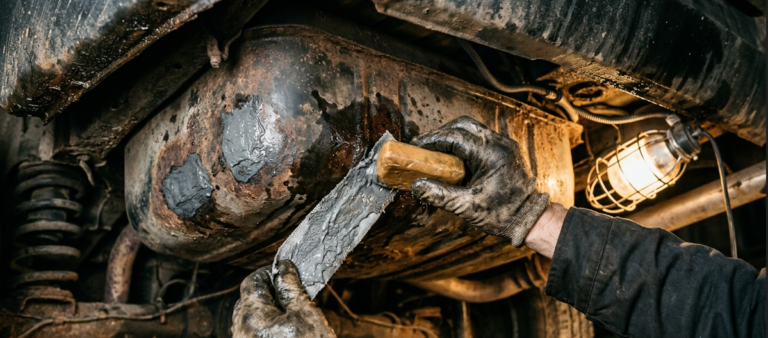
“While AI tools like this are perfect for acoustic diagnostics, some jobs still require getting your hands dirty. If you are restoring older vehicles, check out my practical guide on how to properly repair a leaking gas tank.”