Finished Painting Car What To Check Next: Smart Engine Troubleshooting
Disclaimer: The information in this article is based on personal garage experience and is intended for educational purposes only. The author is not an ASE-certified mechanic. Always consult with a professional before performing complex engine repairs. We may earn a commission for purchases made through affiliate links (Amazon Associates) at no additional cost to you.
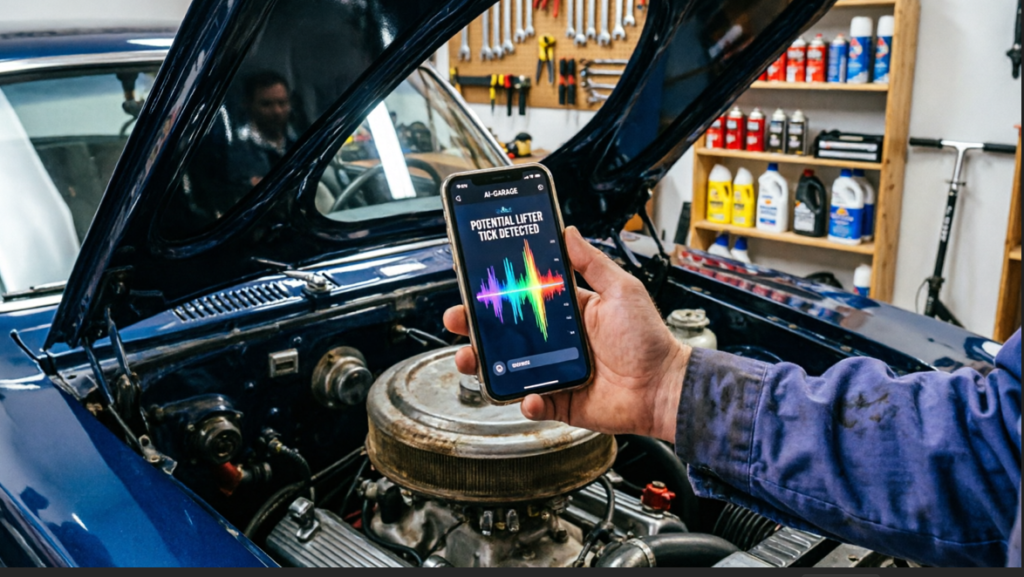
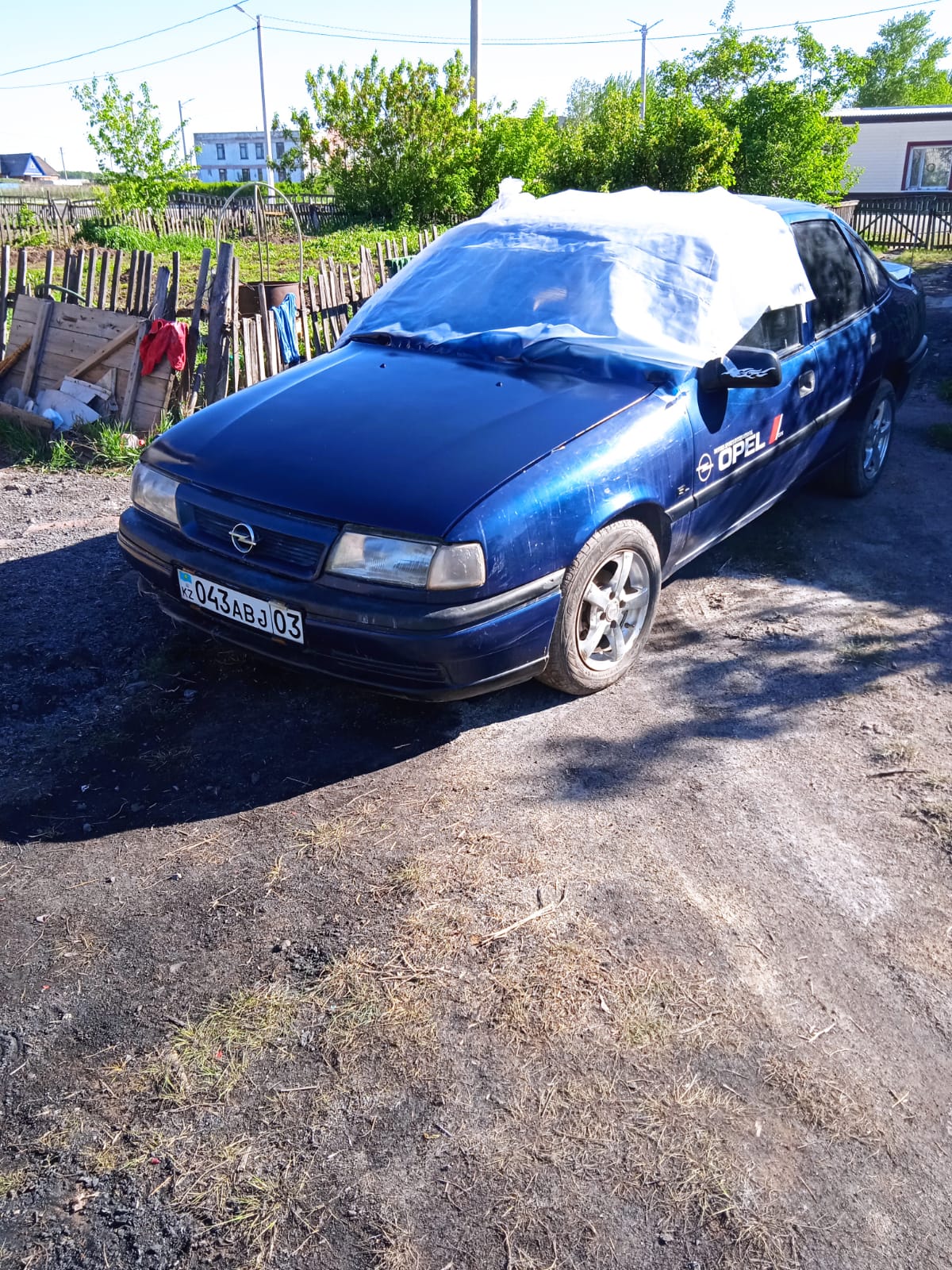
App that listens to car engine. You’ve spent weeks prepping, sanding, and laying down the base coat. The clear coat is finally shining (there’s nothing quite like watching that Persey 429 blue pop in the sunlight), and the body looks like it just rolled off the showroom floor. The logical question for any DIY gearhead is: finished painting car what to check next engine?
You get behind the wheel, turn the key, and instead of a smooth idle, you’re greeted with a nasty surprise. Your engine makes weird noise when starting. That fresh-paint high disappears in an instant.
No one wants to find a hidden mechanical nightmare under a freshly painted hood. Let’s break down how to decode those sounds without tearing the top half of the motor apart.
What Does That Knock Actually Mean?
When you step on the gas, the pitch and rhythm of the sound often change. Automotive forums are flooded with guys asking, “why does my engine make a knocking sound when accelerating?” or “what causes a car to make a tapping noise?”
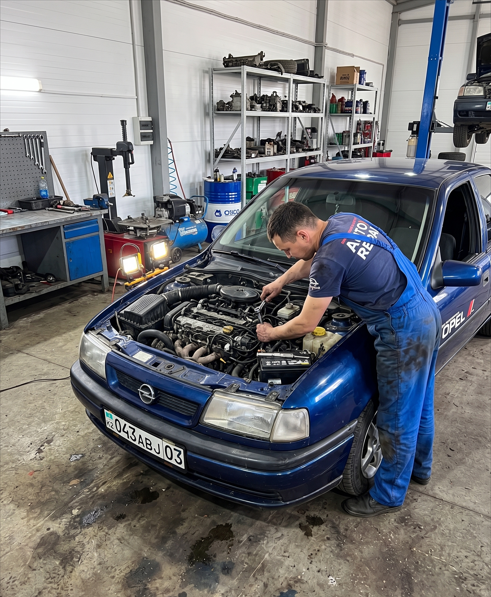
The problem is that under-hood acoustics are incredibly deceptive. Sound bounces off metal surfaces, and what seems like catastrophic bottom-end failure might just be a loose tensioner pulley. Whether you’re wrenching on an old-school European 8-valver like a C16NZ or a tired American V8, odd noises are just part of the experience. But there is a fine line between normal wear and tear and a complete teardown.
Here’s a quick cheat sheet to help you figure out what does a bad engine sound like:
| Sound Type | Potential Cause | Symptoms & Context | Danger Level |
| Light Ticking / Clicking | Valvetrain issues (signs of lifter tick) | Louder on a cold start, often quiets down as oil pressure builds. Frequently searched as ticking noise coming from engine when accelerating. | Medium (Check oil pressure, consider an engine flush). |
| Deep, Heavy Metallic Knock | Worn connecting rod bearings (Rod Knock) | Rhythmic knocking deep in the engine block. Gets significantly louder under load/acceleration. | Critical (Shut the engine off immediately, prepare for a rebuild). |
| High-Pitched Squeal / Whirring | Alternator bearings, idler pulleys | RPM-dependent, might change pitch when electrical load increases (turning on AC/headlights). | Low (But a snapped serpentine belt will leave you stranded). |
| Sharp Popping / Ticking | Exhaust manifold leak | Sounds almost like a tractor or a puffing noise when you blip the throttle. | Medium. |
App that listens to car engine. Old School: Listening to the Metal
The old-timers taught us to put a long flathead screwdriver against our ear and rest the tip on the valve cover to pinpoint the noise. It works, but it requires a trained ear. If you are looking for mechanic stethoscope alternatives for diy, stepping up to an actual dedicated tool is the smartest move.
Related Read: Want to dive deeper into pinpointing exact mechanical failures before relying on digital tools? Read our full breakdown on [ Mastering DIY Engine Diagnostics].
Recommended Tool: Lisle 52750 Mechanic’s Stethoscope or a similar kit from OEMTools. It costs next to nothing (usually under $20) and instantly isolates the noise from background engine clatter. (Insert Product Image and Affiliate Link)
But what if you already bought the stethoscope, placed the probe on the block, and you’re still Googling “what would cause my car to make a ticking noise” because you can’t tell the difference between a loud fuel injector and a dying hydraulic lifter? We’ve all been there. This is exactly where figuring out what causes lifter knock turns from a diagnostic process into a stressful guessing game.
The New Era: Digital Hearing in Your Pocket
We live in an era where technology can do the heavy lifting for us. You no longer need to spend decades training your ear in a greasy garage. If you’re wondering how to diagnose engine noise with a smartphone, the answer is going to change how you wrench.
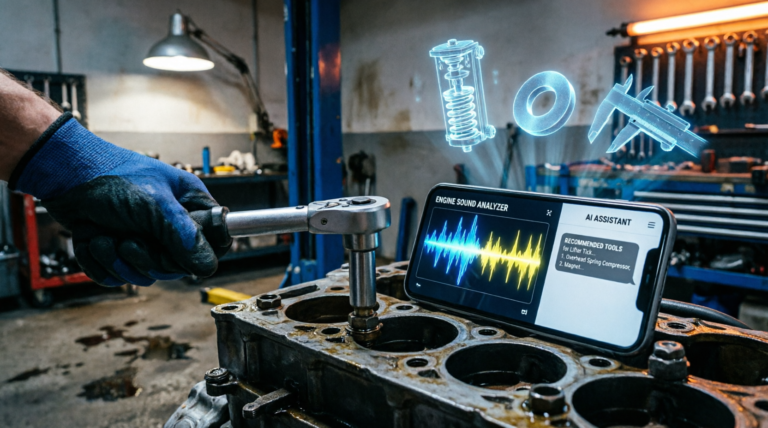
For classic car engine noise troubleshooting, modern DIYers are turning to AI. It’s not sci-fi anymore—there is actually an app that listens to car engine acoustics and analyzes the sound waves.
Instead of guessing why there’s a loud ticking noise from engine when accelerating, you can just open the AI-Garage app, hold your phone near the running engine, and record a short 10-second audio sample. The artificial intelligence, which has been trained on thousands of hours of failing engine spectrograms, gives you a probability-based diagnosis. It tells you if your specific noise matches the acoustic pattern of a spun rod bearing or if it’s just a harmless noisy injector.
Bodywork teaches us patience, but mechanical work requires precision. Don’t rely on gut feelings when it comes to the heartbeat of your project car.
Try it now: Got a strange engine noise? Upload your sound to our [Free AI Engine Sound Diagnosis Tool] and get an instant analysis.
Authoritative Resources for Further Reading:
- Want to dive deep into oil chemistry and how it affects hydraulic lifter noise? Check out the expert forums at Bob Is The Oil Guy.
- For official technical service bulletins on noise diagnostics, refer to the portals certified by ASE (National Institute for Automotive Service Excellence).