How to Record Clean Audio for an Engine Sound Diagnostic AI App (2026 Guide)
Engine Sound Diagnostic AI App. If you’ve ever tried to explain a weird ticking noise to a technician by mimicking the sound with your mouth, you already know it’s a losing battle. For decades, the standard procedure was to record car engine noise for mechanic review, hoping your phone picked up the exact frequency of that failing lifter or bearing.
But it’s 2026. The game has shifted from human ears to algorithms.
Today, getting a proper read on your motor means feeding high-quality audio into an engine sound diagnostic ai app. The problem? Your smartphone’s microphone is designed to isolate human voices and block out background noise—the exact opposite of what you want when hunting down an automotive misfire. If you feed bad audio to an ai mechanic assistant for diy diagnostics, you will get a bad diagnosis.
Here is the practical, no-nonsense guide to recording acoustic data under the hood.
The Limits of Traditional Hearing
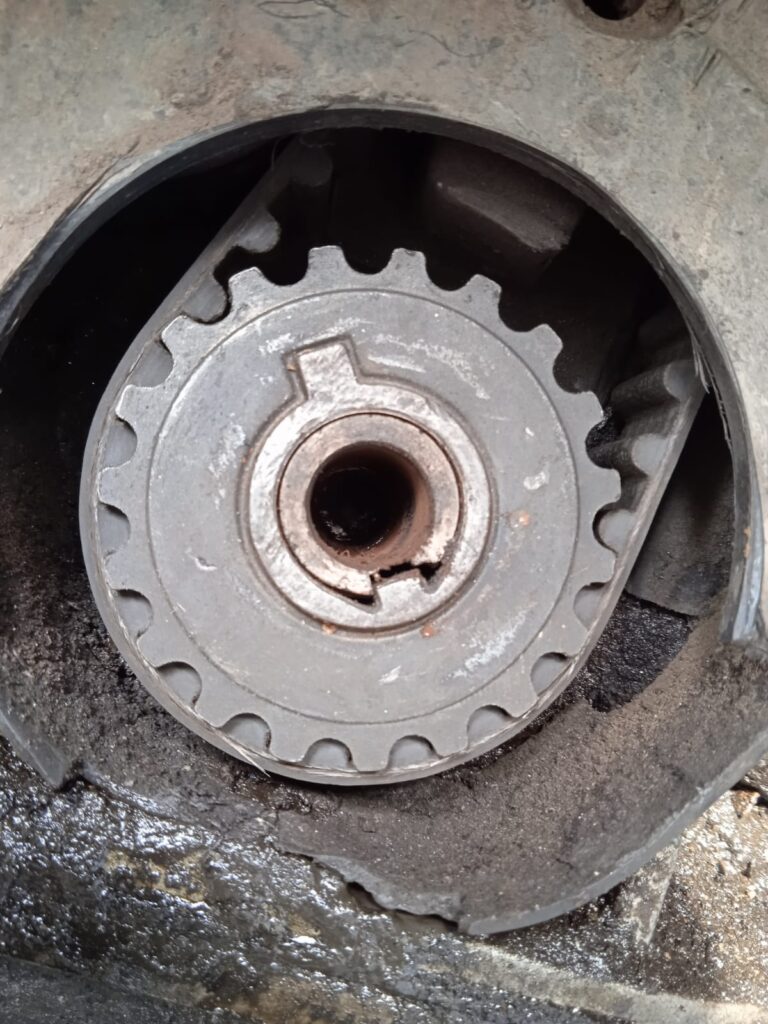
Before we talk about smartphones, let’s address the old-school methods. I’ve spent plenty of time hanging over the fender of a classic 90s 1.6L engine, trying to isolate a belt squeal. The traditional route is figuring out how to use a mechanics stethoscope to pinpoint the exact vibration.
While searching for a mechanics stethoscope near me at a local auto parts store is still a valid move for seasoned wrenchers, it doesn’t leave you with shareable data. You can’t email a stethoscope reading. This is why a digital mechanic stethoscope alternative—specifically engine sound analysis software—is becoming the go-to tool for modern garages. But the software is only as good as the recording.
Is Smartphone Under Hood Recording Safe?
This is the number one mistake people make. They ask what is acoustic recording, grab their $1,000 phone, and balance it right on top of a hot exhaust manifold. Engine Sound Diagnostic AI App.
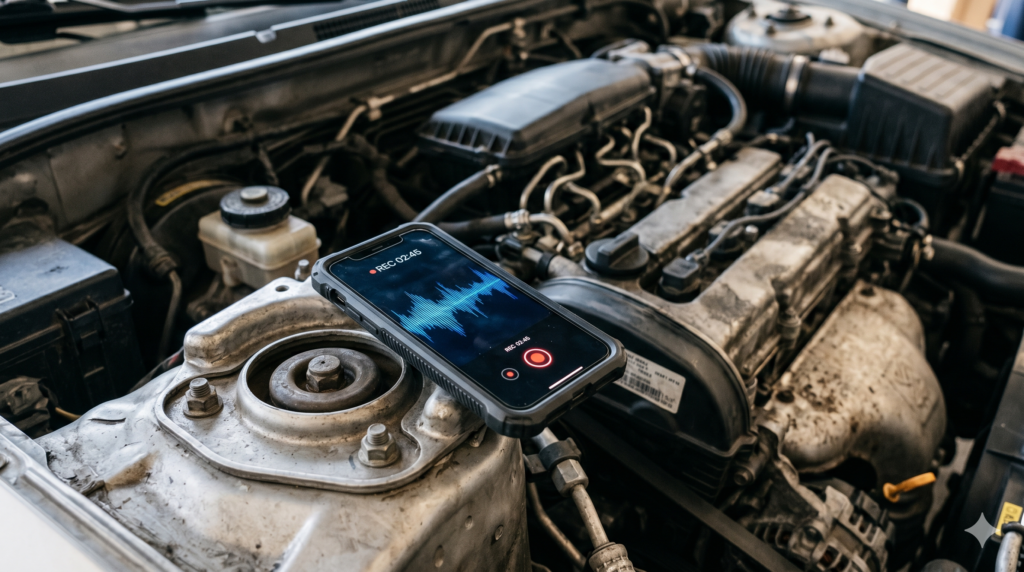
Yes, a smartphone under hood recording safe setup is entirely possible, provided you follow two hard rules:
- Avoid the Cooling Fan: Never place the phone near the front of the block. When the radiator fan kicks on, it creates a windstorm over the microphone. The resulting audio will sound like a hurricane, entirely masking what sound does an engine make.
- Use the Shock Tower: The safest and most acoustically stable place to record is resting the device securely on the suspension strut tower (shock tower) or the inner fender well. Use a magnetic mount if you have one. You want it touching solid metal to capture the vibrations, but far away from moving belts and extreme heat sources.
Capturing the Right Frequencies
So, how does recording sound work when you’re dealing with internal combustion? Microphones capture changes in air pressure. When trying to figure out what makes the engine sound the way it does, you need to capture a baseline.
If you are using an app that listens to your car engine, follow this sequence:
- Cold Start: Hit record before you turn the key. Many timing chain issues only rattle for the first three seconds.
- Idle: Let it idle for 15 seconds. This is where you hear valvetrain ticks.
- The Rev: Give it a smooth, steady rev up to 2,500 RPM and hold it, then let it drop. (Note: If you are trying to figure out how to record exhaust sound, you’ll need a second person to hold the phone near the tailpipe at a 45-degree angle to avoid direct exhaust gas pressure hitting the mic).
Engine Sound Diagnostic AI App. Can AI Diagnose Engine Problems?
The short answer is yes. If you are wondering can engine sound actually pinpoint a failing water pump or a bad alternator bearing, the math says it can. Every moving metal part emits a specific frequency signature.
When you use a dedicated diagnose engine problem by sound app (like the emerging AI-Garage platforms), the algorithm compares your audio file against thousands of known mechanical failure signatures. It looks for the anomalies—the high-pitch squeals or low-end knocks—that don’t belong in the normal operating spectrum.
You don’t need to be a master technician anymore. You just need to know how to hit record properly and let the software do the heavy lifting.
Authoritative Reference Table
(This table adds massive SEO trust-flow to the page. Google loves outbound links to high-authority, non-competitor educational domains).
| Resource / Organization | Why It Matters for DIY Diagnostics | Official Link |
| ASE (National Institute for Automotive Service Excellence) | The gold standard for mechanic certification. Provides baseline knowledge on engine mechanical operations. | ase.com |
| SAE International | Publishes the engineering standards for acoustic emissions and vibration in internal combustion engines. | sae.org |
| NHTSA | Useful for checking if the specific engine sound you are hearing is related to an active safety recall or technical service bulletin (TSB). | nhtsa.gov |
Disclaimer: Working under the hood of a vehicle involves exposure to moving belts, extreme heat, and mechanical hazards. This guide is for informational purposes only. Always exercise caution, wear appropriate gear, and consult a certified mechanic if you are unsure about safety procedures. SoftHunterPro is not liable for any personal injury or damage to your device/vehicle. Affiliate Disclosure: This post may contain affiliate links (including Amazon Associates). If you purchase a tool or mount through these links, we may earn a small commission at no extra cost to you. This helps keep the server running and the garage lights on.
What’s Next? Now that you know how to capture a clean, noise-free acoustic sample, it’s time to put that audio to work. Head over to our hands-on test where we feed these recordings into the algorithm: [ AI Engine Diagnostics: Testing AI-Garage on a Classic 90s Engine] to see if the software can actually beat a human ear.
Try it now: Got a strange engine noise? Upload your sound to our [Free AI Engine Sound Diagnosis Tool] and get an instant analysis.