The Ultimate AI Video Showdown 2026: Wan 2.1, Luma, and Mochi 1
In 2026, the question is no longer “Can AI make video?” but “Which AI fits my specific pipeline?” After running identical prompts through every major engine for a high-end client project last week, I’ve broken down the reality of the current landscape.
The Flagship Battle: Wan 2.1 vs. Luma Dream Machine
If you browse any motion design forum right now, the most common debate surrounds a Wan 2.1 vs. Luma Dream Machine detailed comparison 2026. Here is how they stack up in production:
Luma Dream Machine: The King of Atmosphere
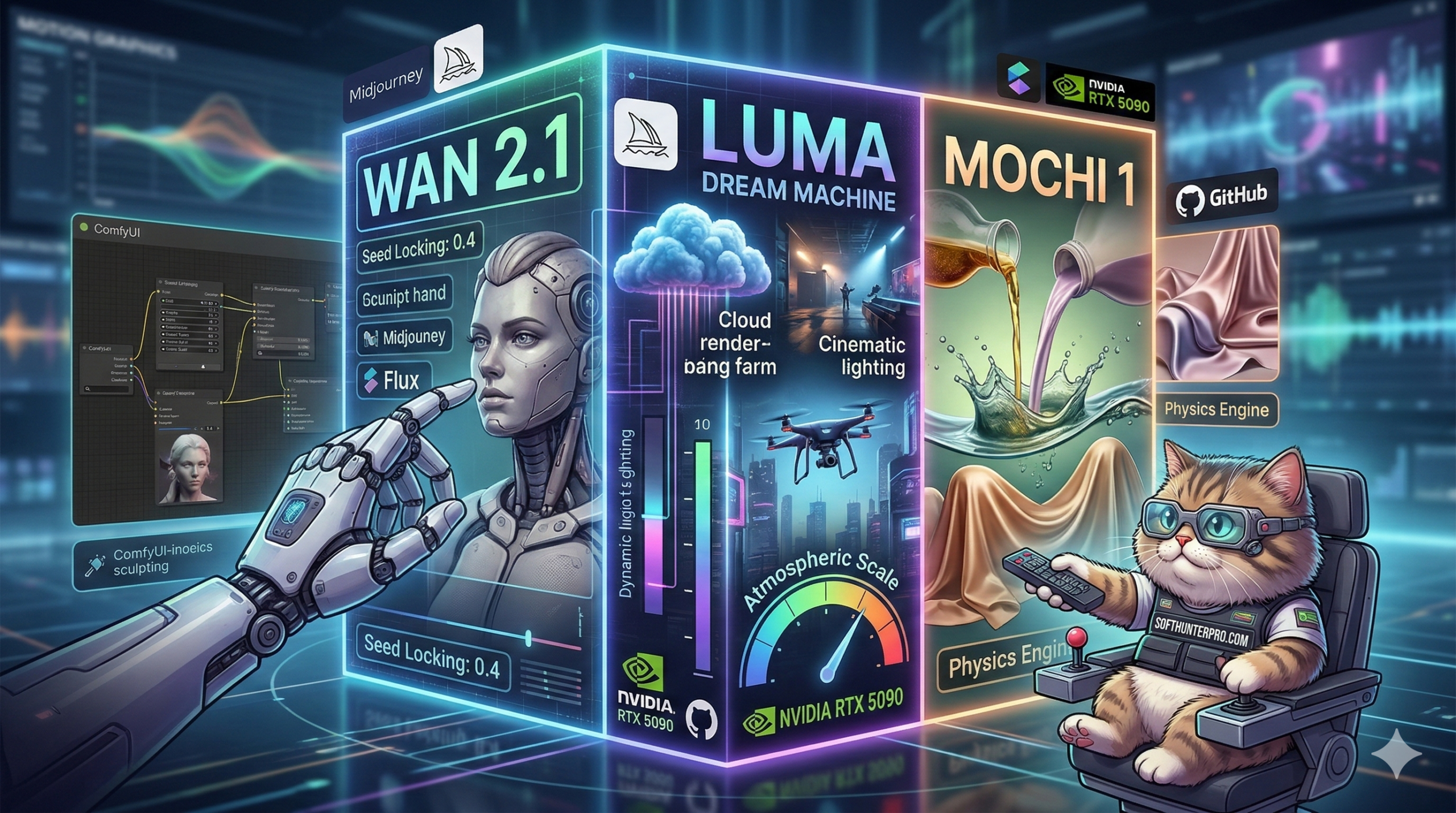
The Luma Dream Machine remains the “king of the cloud.” It excels at cinematic understanding. If you need a drone shot flying through a cyberpunk city with consistent physics, Luma is your safest bet. It understands gravity and lighting better out of the box.
- The Catch: You pay for it with a closed subscription model and zero control over the rendering pipeline.
Wan 2.1: The Precision Tool
This is for the control freaks (myself included). Wan 2.1 wins when you need precise prompt adherence. If I need a character to lift a coffee cup exactly this way, Wan listens. Luma often hallucinations extra movements.
- The Verdict: Use Luma for establishing shots. Use Wan 2.1 for character acting and specific storyboard execution.
Wan 2.1 Image to Video: Consistent Characters Guide
The biggest headache of the generative AI boom was flickering faces. By 2026, things have stabilized, but they still aren’t perfect without a workflow. Here is the Wan 2.1 image to video consistent characters guide I use to keep actors from morphing into strangers:
- The Reference Anchor: Never generate strictly from text. Start with a perfect seed image from Midjourney or Flux. This is your anchor.
- Seed Locking: In the new Wan 2.1 interface, lock your seed number across related shots. This ensures the “DNA” of the noise generation remains the same.
- The “Sweet Spot” Denoising: Set your Denoising Strength between 0.4 and 0.6. Anything higher, and the AI starts to improvise new facial features.
- Inpainting Masks: If a face distorts, use masking tools to regenerate only the head area while keeping the body movement intact.
Powering the Beast: Best Hardware for Running Wan 2.6 Locally
While most are mastering 2.1, the early access release of Wan 2.6 is already turning heads. It’s smarter and faster, but it absolutely eats hardware for breakfast. Based on my workstation benchmarks, here are the best hardware specs for running Wan 2.6 locally:
- VRAM (The Non-Negotiable): 24GB is the bare minimum. 12GB cards are obsolete for this model.
- Budget Choice: A used RTX 3090 or 4090.
- Pro Choice: NVIDIA RTX 5090 (the current gold standard).
- System RAM: 64GB DDR5 is the new baseline for loading massive model weights in 2026.
- Storage: Fast NVMe Gen 5 drives. Loading tensors from a standard SSD feels archaic with models this size.
Note: If you don’t have the hardware, you can run these models via Fal.ai on a pay-per-use basis.
How to Use Mochi 1 for Commercial Video Production
Mochi often gets ignored because it isn’t as “hyped” as the others. That is a mistake. When colleagues ask me how to use Mochi 1 for commercial video production, I tell them: Physics and Fluids.
Mochi 1 by Genmo has a bizarrely good understanding of liquid dynamics, hair, and cloth.
- Pro Workflow: Generate the environment in Luma, but use Mochi 1 for the tight shots—pouring liquid into a glass or ice splashing. The fluid motion is incredibly organic and saves thousands compared to traditional CGI simulations.
Quick Content: A Step by Step Guide to FunVideo AI for Beginners
Not everyone is a filmmaker. Sometimes you just need an Instagram Story ten minutes ago. Here is a step by step guide to FunVideo AI for beginners:
- Skip the Complex Prompts: FunVideo AI relies on presets (Anime, Realism, Claymation). Select the style button first.
- Upload an Image: It works best as an animator. Upload a static product photo.
- One-Click Effects: Use the UI buttons like “Zoom,” “Pan,” or “Wink” instead of text commands.
- Generate: It takes seconds. It’s not cinema, but for social media engagement, it’s the most efficient tool in the bucket.
FAQ: Choosing the Right AI Video Tool in 2026
Q: Is Wan 2.6 significantly better than Wan 2.1? A: Yes, especially in temporal consistency and multi-shot camera control, but the hardware requirements are nearly double.
Q: Can I use Mochi 1 for free? A: Since it’s open-source, you can run it for free locally via GitHub or use their hosted playground.
Q: Which AI is best for realistic human skin? A: Currently, Kling AI 3.0 and Wan 2.1 are tied, but Wan offers more post-generation control through ComfyUI.
Final Thoughts: In 2026, there is no “best” generator. Choose the tool that fits the deadline, not the hype. Happy rendering.
Disclosure: This post contains affiliate links.
If you purchase through my links, I may earn a commission at no extra cost to you.
I test these tools so you don’t have to.